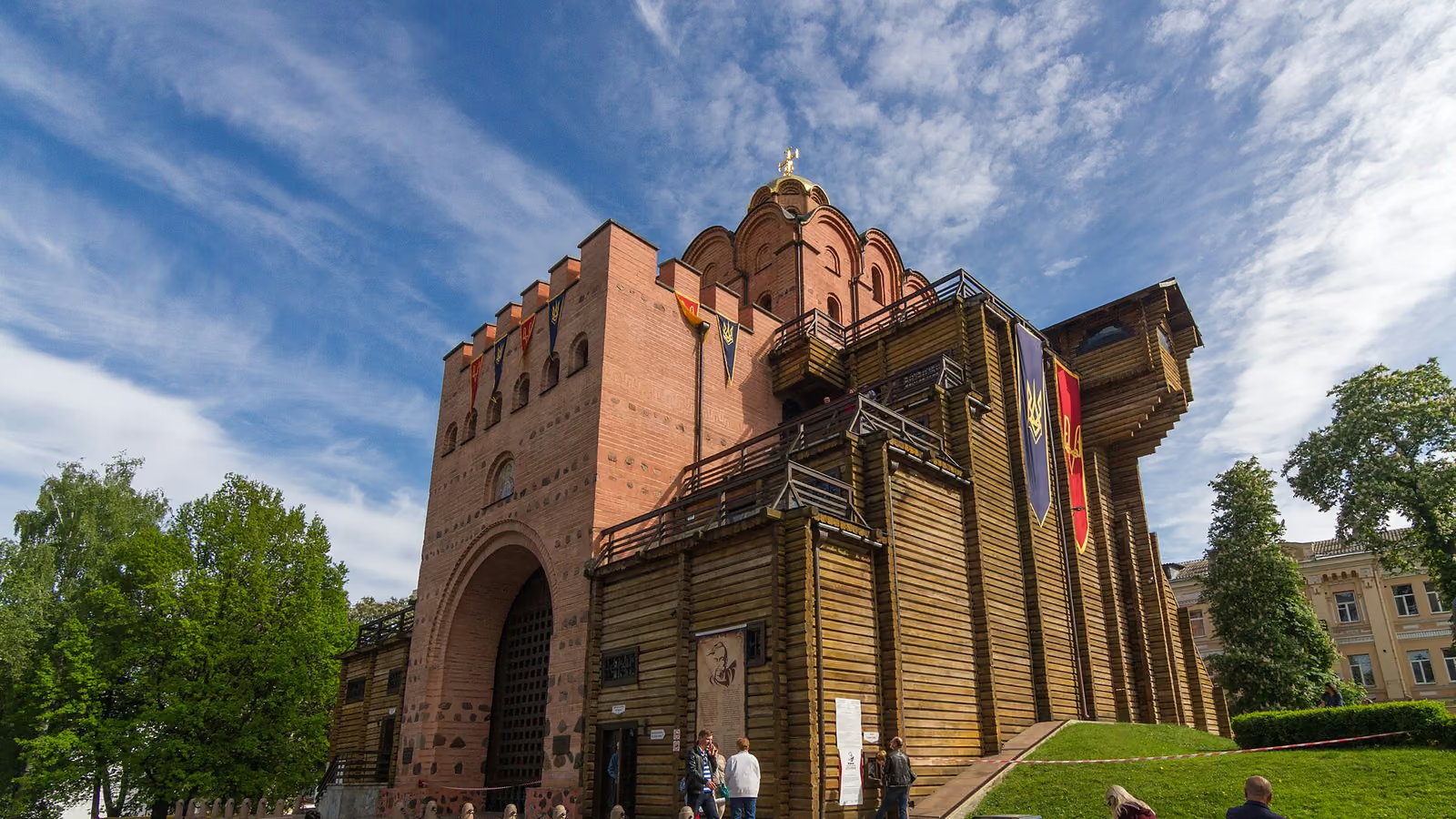
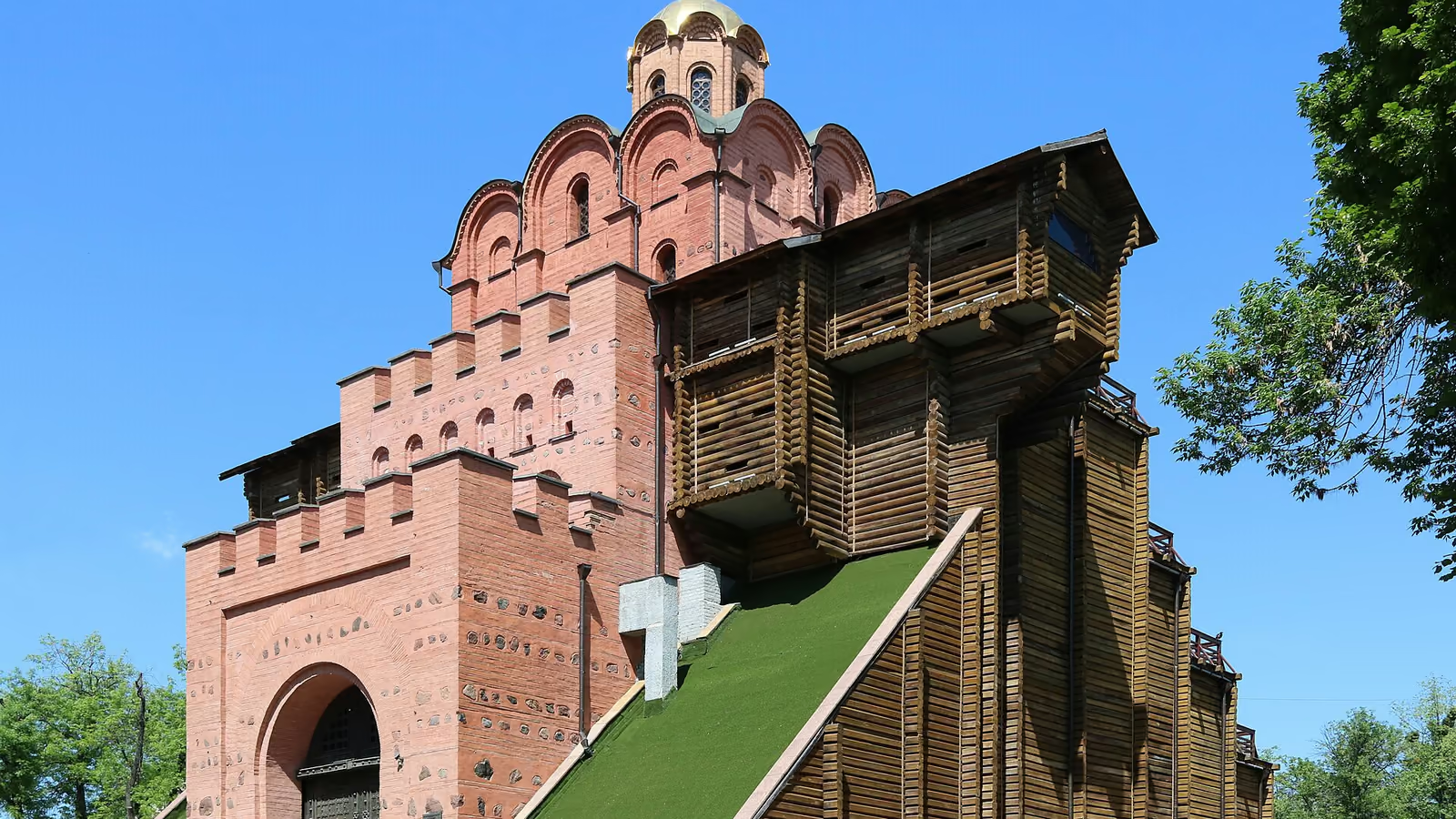
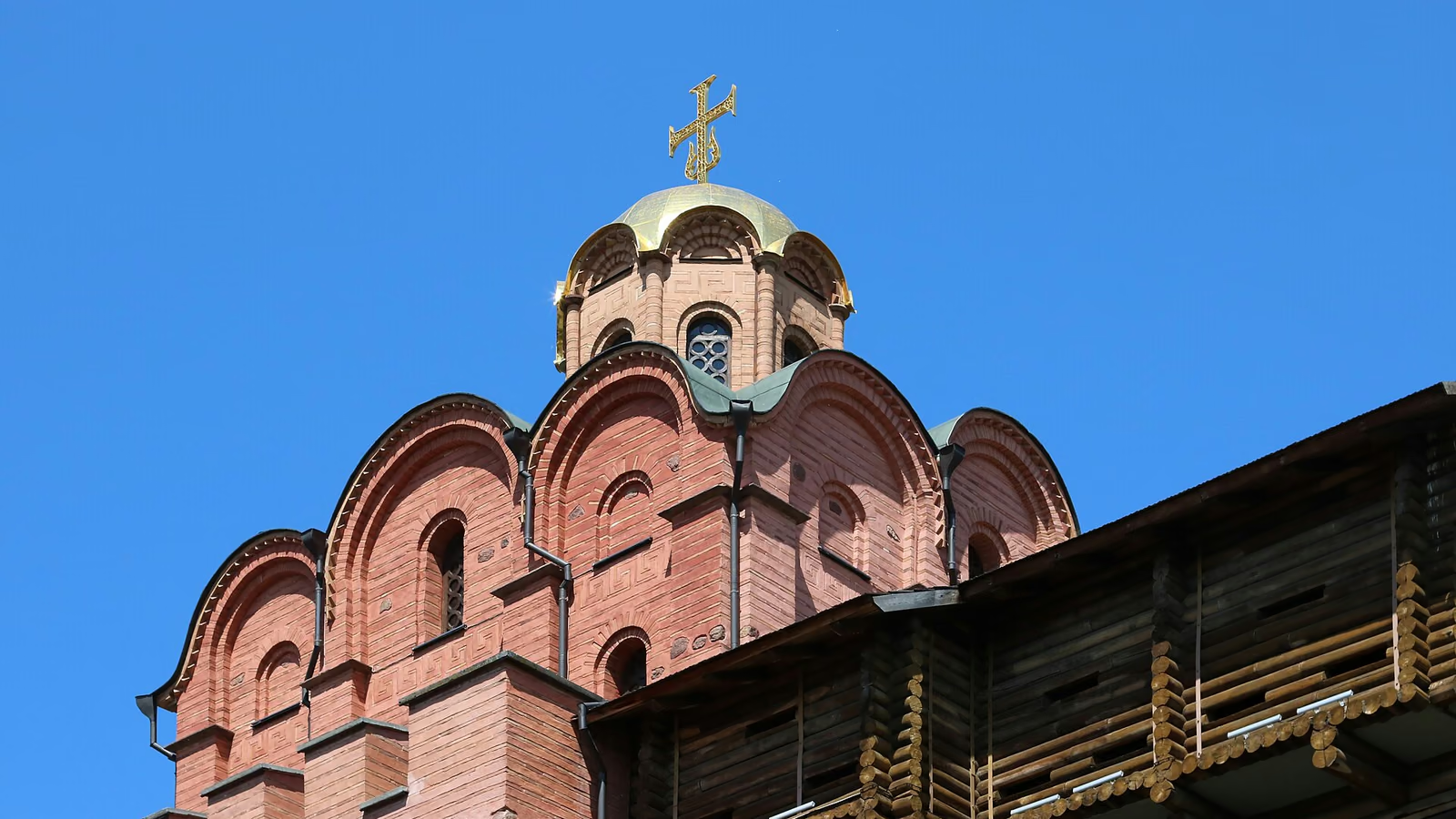
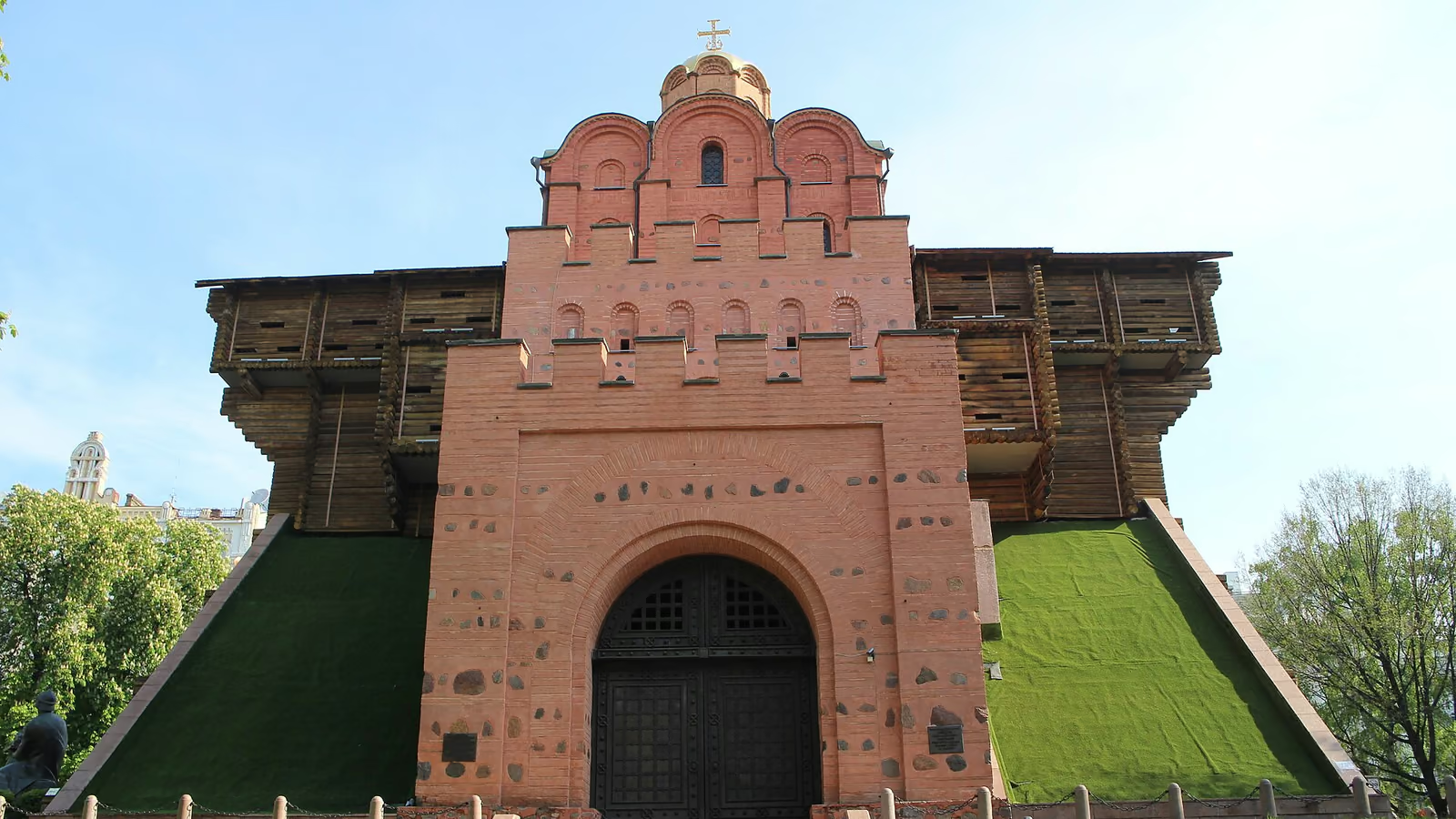
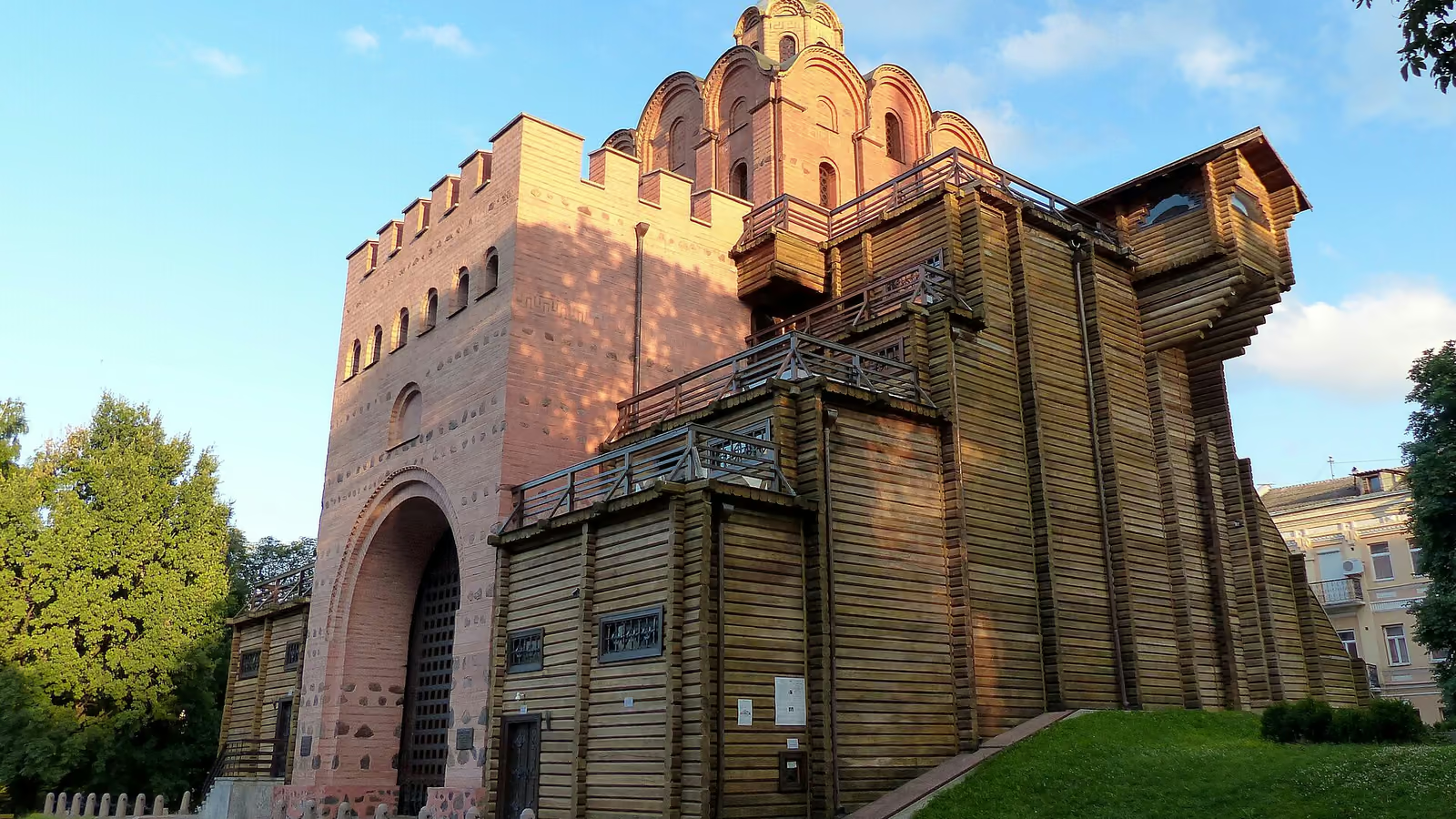
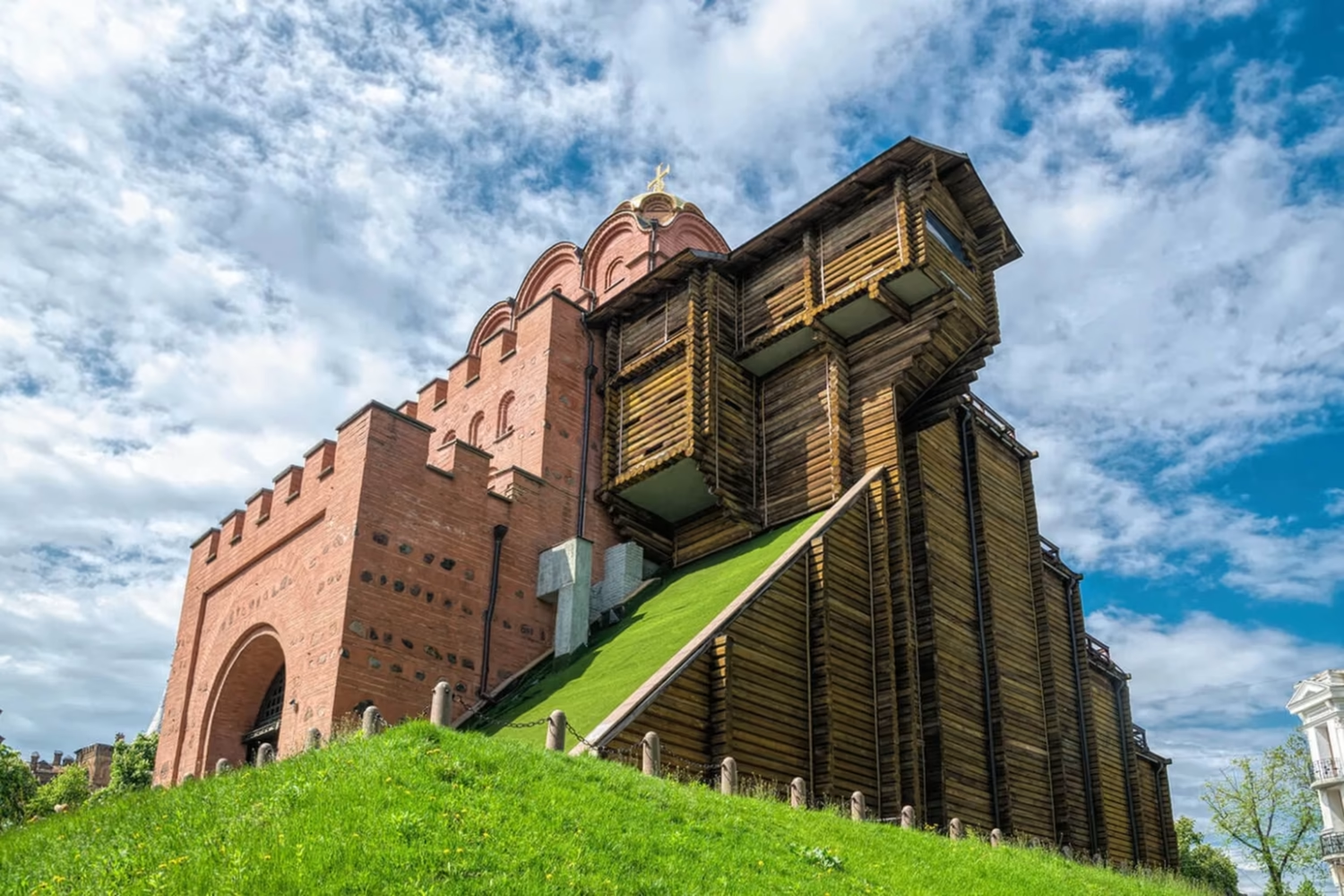
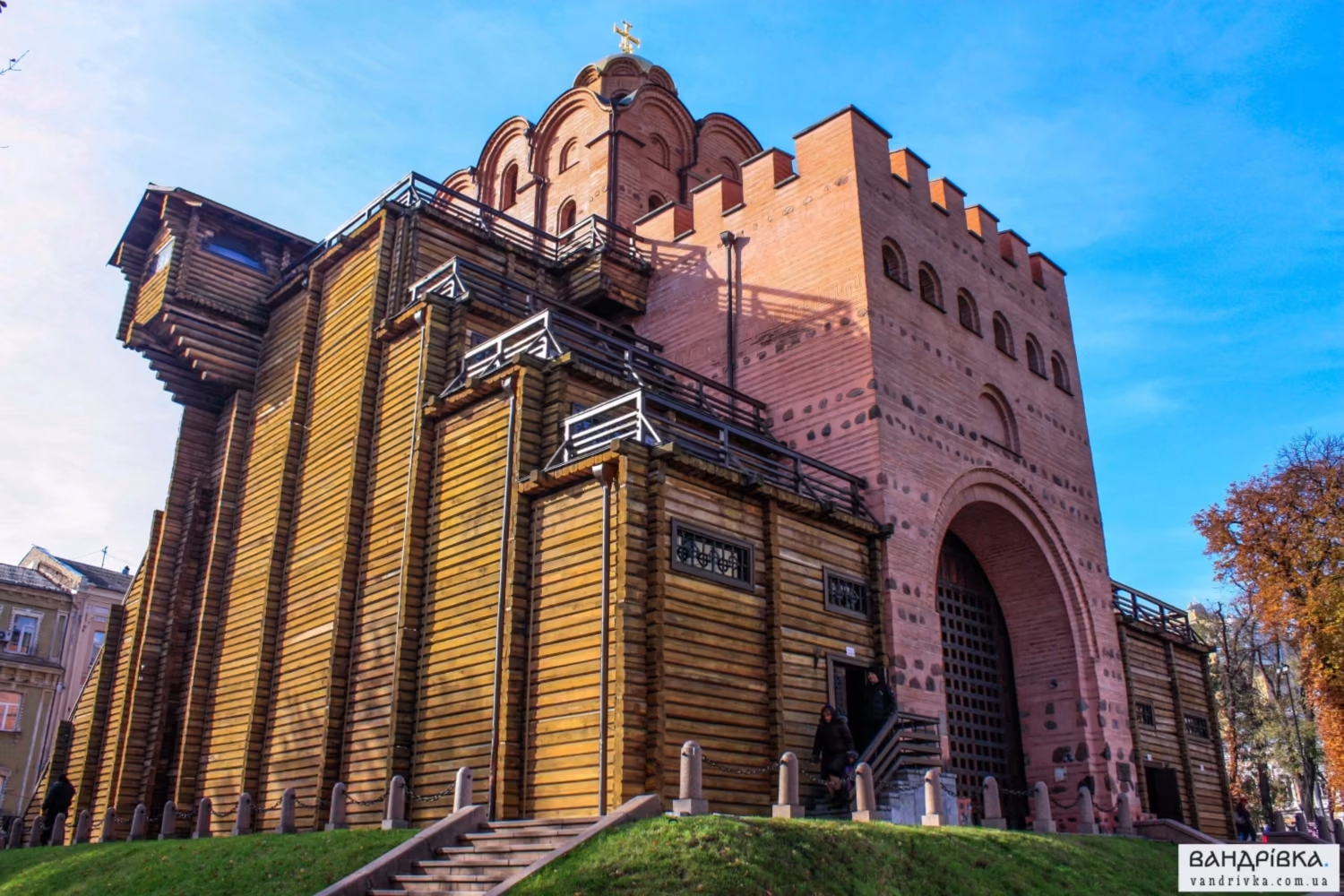
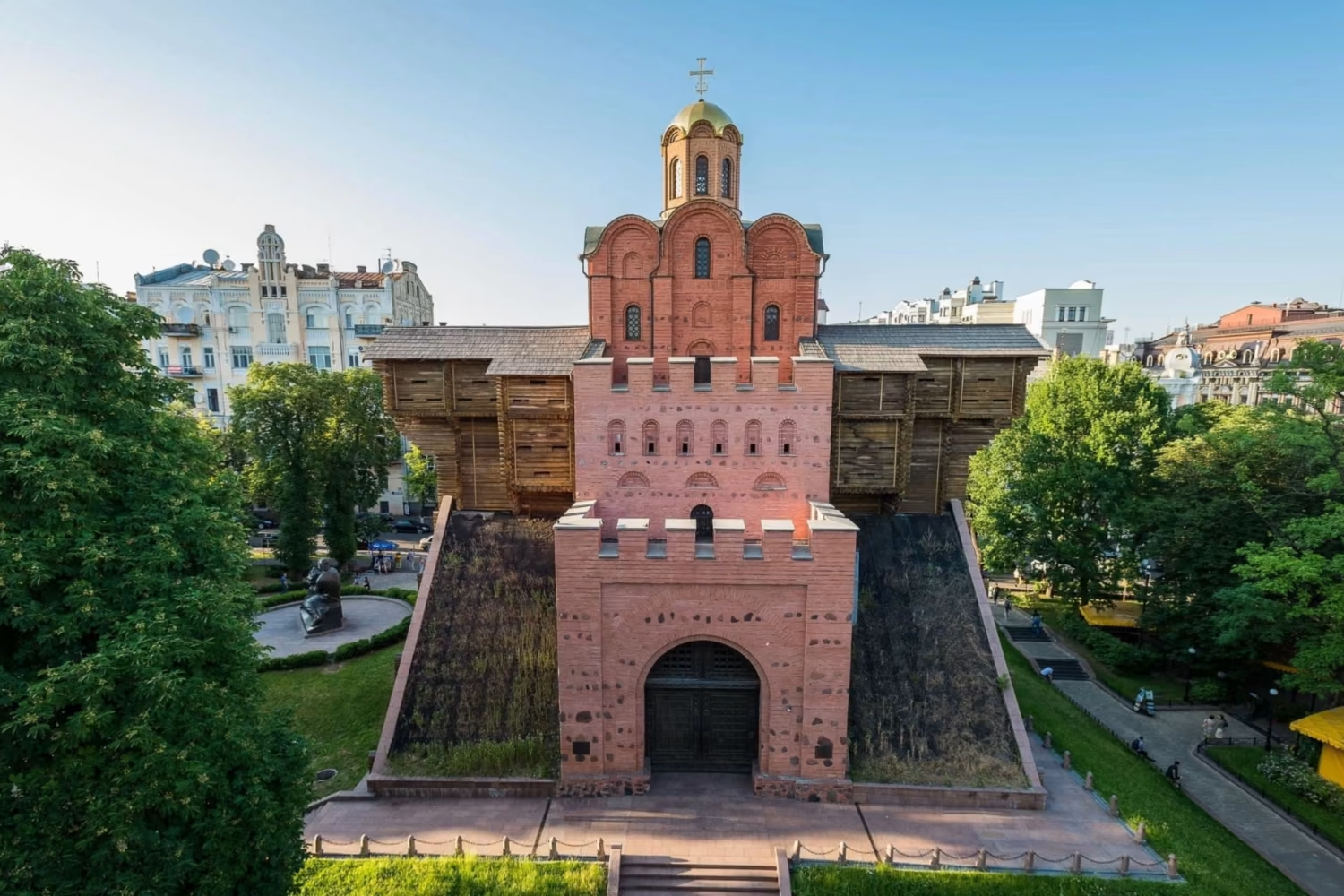
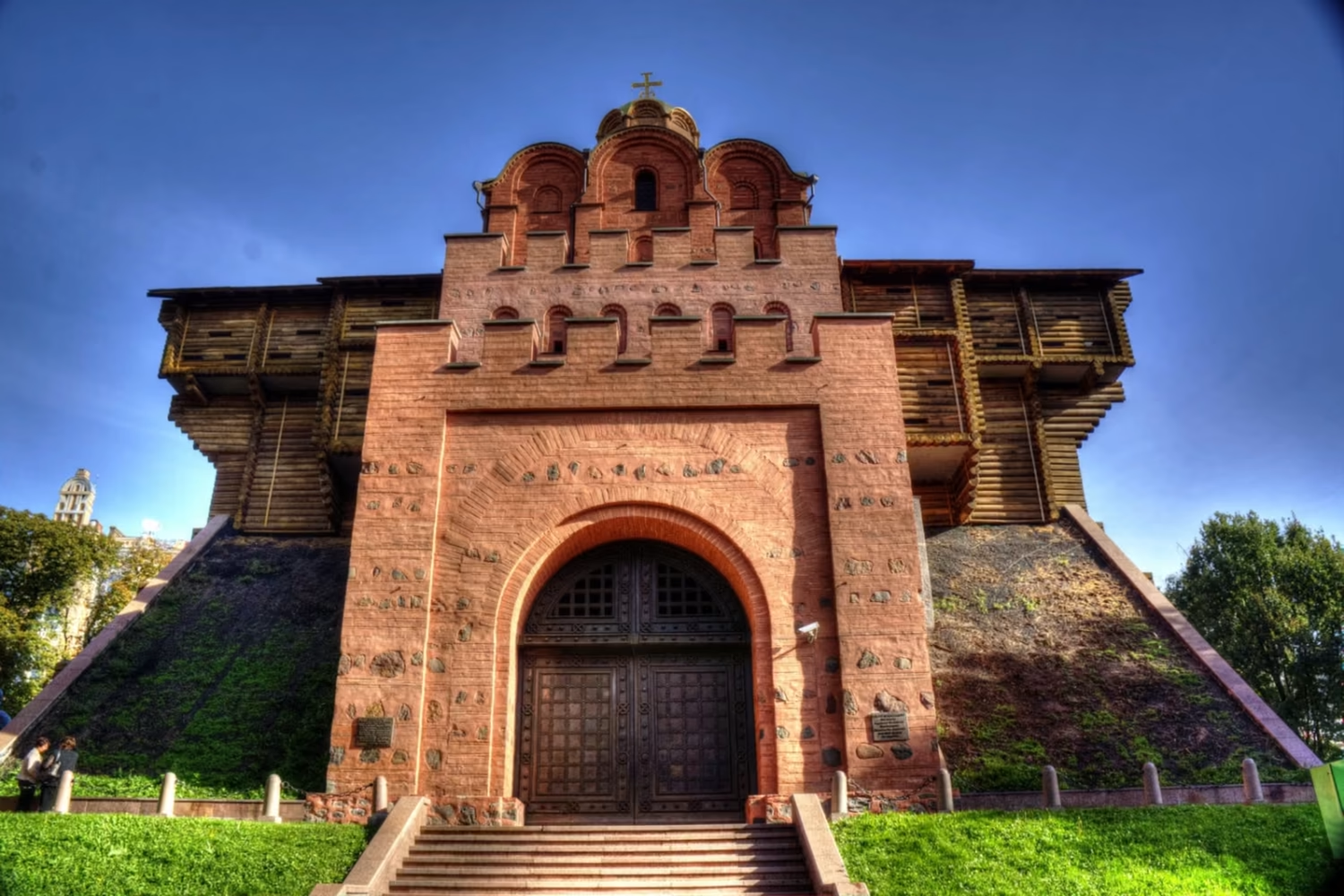
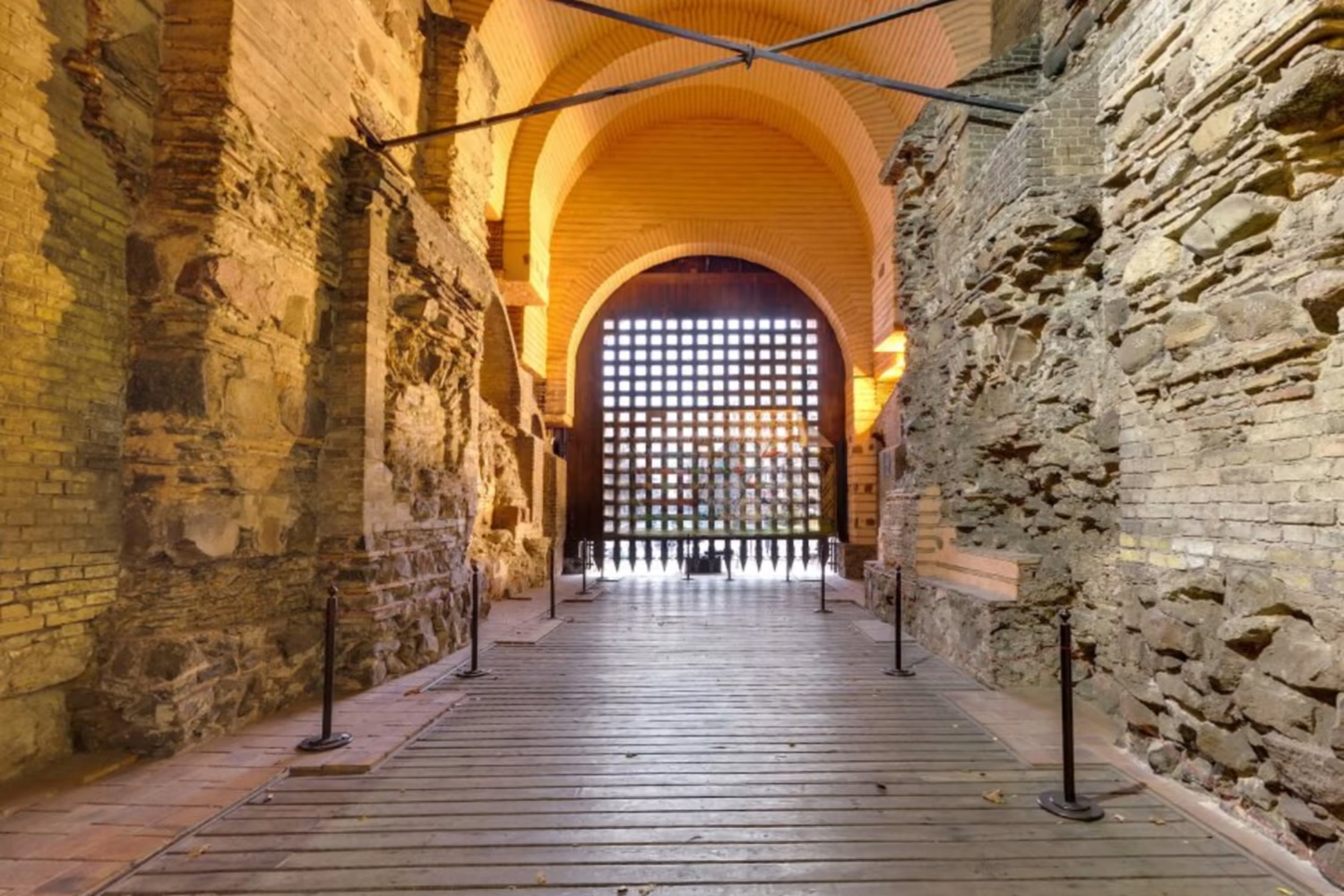
The main gate of ancient Kyiv, mentioned in the chronicle under the year 1037, is one of the oldest dated structures in Eastern Europe and a long-standing symbol of the city. It was named after the Golden Gate of Constantinople: good news was meant to come into the city through it. Today a pavilion-museum in the Kyivan Rus style stands over the ruins of the original structure.
Why visit
- Kyiv’s main gate, mentioned in the chronicle as early as 1037, one of the oldest dated structures in Europe
- Fragments of the original 11th-century fortifications have survived inside the pavilion
- A UNESCO World Heritage Site as part of the “Sophia of Kyiv” reserve
- Named after the Golden Gate of Constantinople: good news was meant to come through it
- The pavilion in the Kyivan Rus style was built in 1982 for the celebration of Kyiv’s 1500th anniversary
- You can book the raising of the portcullis, the battle gate, to see the ruins up close
Good to know
Ticket prices
Museum admission costs UAH 150, reduced UAH 70.
7-day Museum Pass
The Museum Pass (UAH 500, reduced UAH 300) is valid for 7 days and also covers the grounds of the St. Sophia Museum, the cathedral, the Metropolitan’s House and St. Cyril’s Church: good value if you plan to visit several sites of the reserve.
Special activities
Raising the portcullis (the battle gate) to view the ruins: UAH 400. Gate opening: UAH 200.
Opening hours
Tuesday to Thursday from 10:00 to 18:00 (box office and entry until 17:30), Friday to Sunday from 11:00 to 19:00 (box office and entry until 18:30). Closed on Mondays. In winter the museum is open only on Saturdays and Sundays.
Photo and video inside
Photography inside the Golden Gate costs UAH 50 per shot/video.
Getting there
In Zolotovoritskyi Square between Volodymyrska, Yaroslaviv Val and Lysenka Streets. The nearest metro station is Zoloti Vorota, right by the station exit.