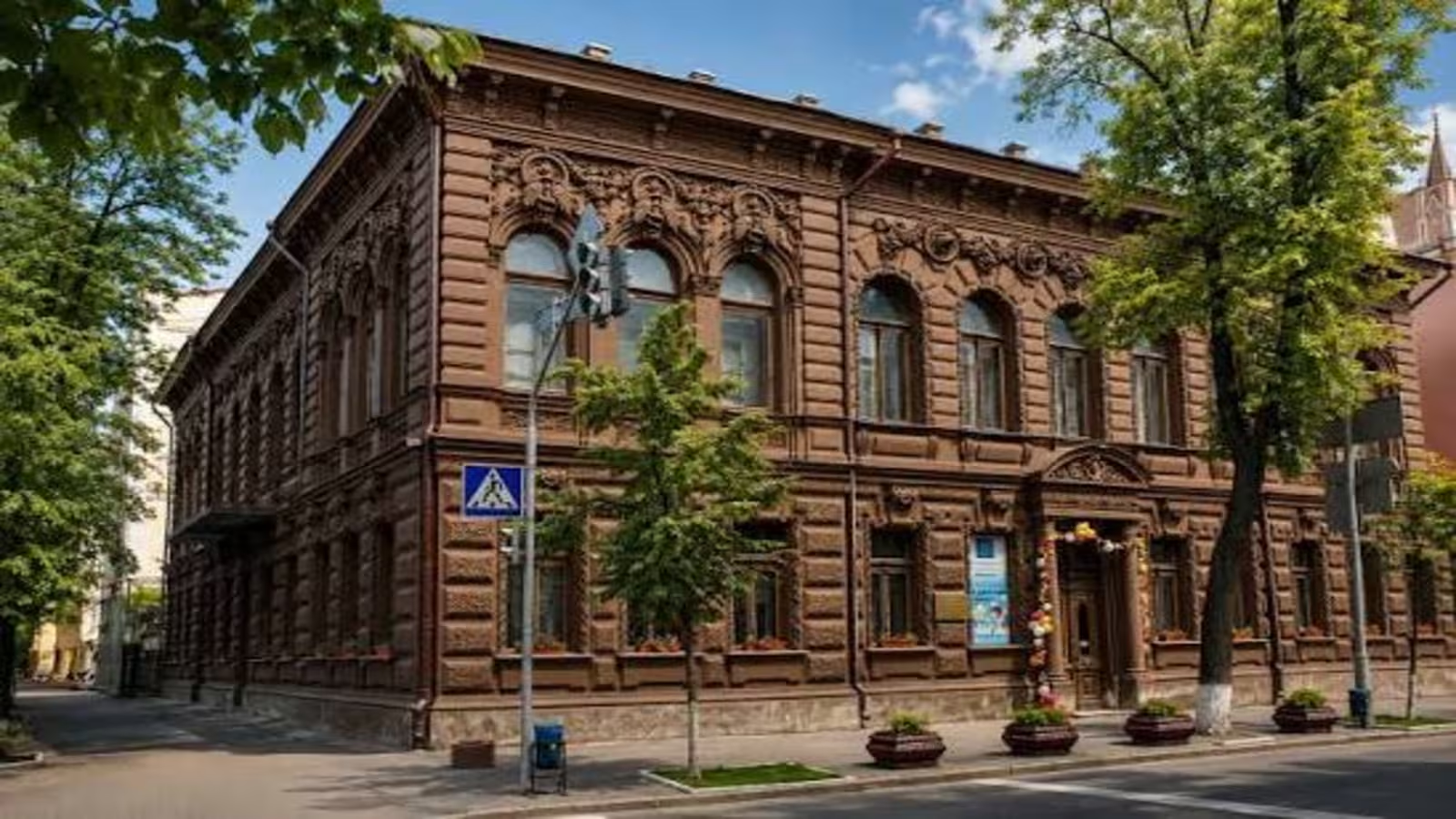
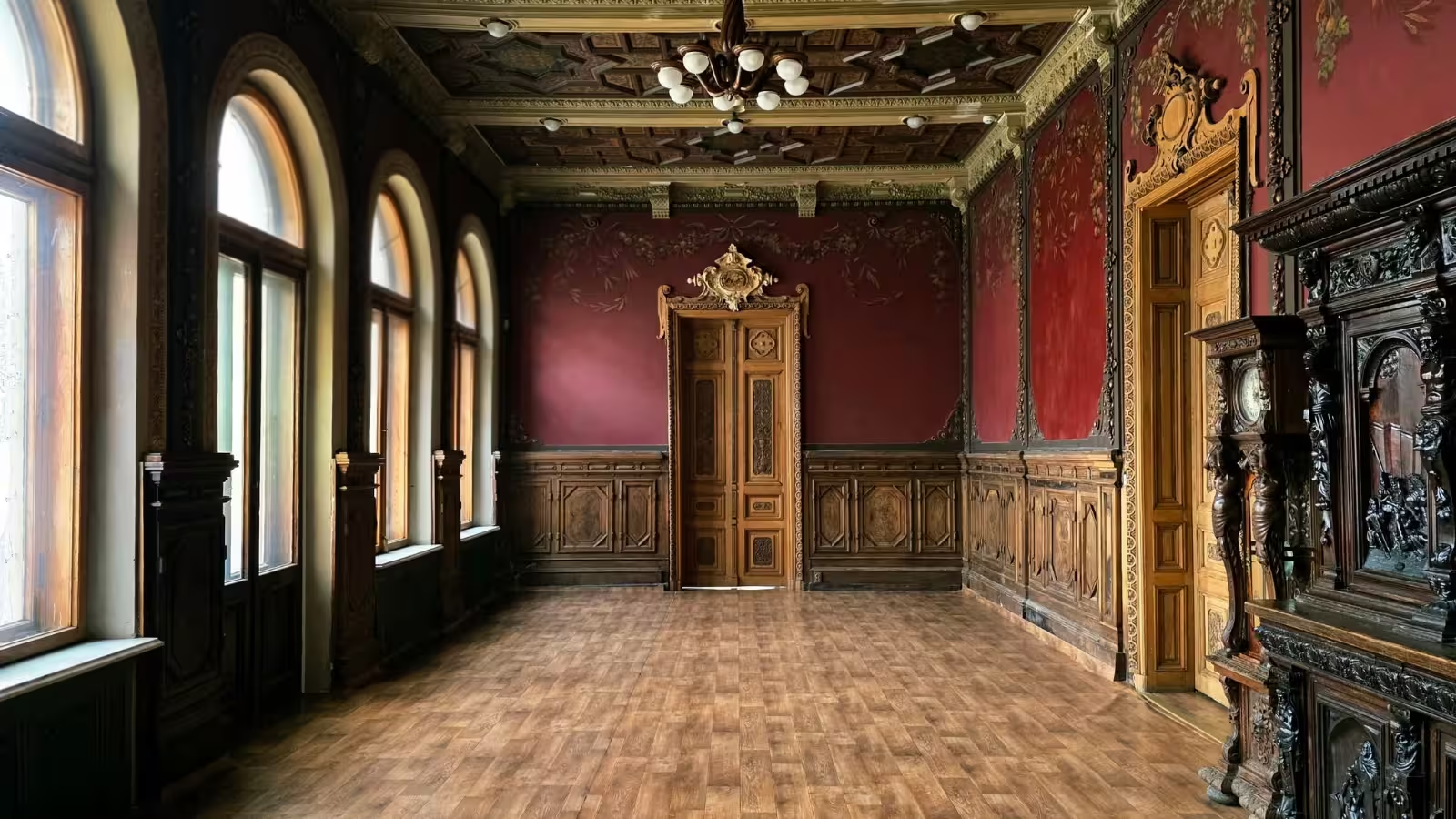
One of Kyiv’s best-known mansions, which locals call the Chocolate House because of its dark brown facade. Inside are nine state rooms, each in its own style, and a permanent exhibition of Ivan Marchuk.

Why visit

  • One of Kyiv’s most beautiful mansions: a dark brown 1901 palazzo that locals nicknamed the Chocolate House
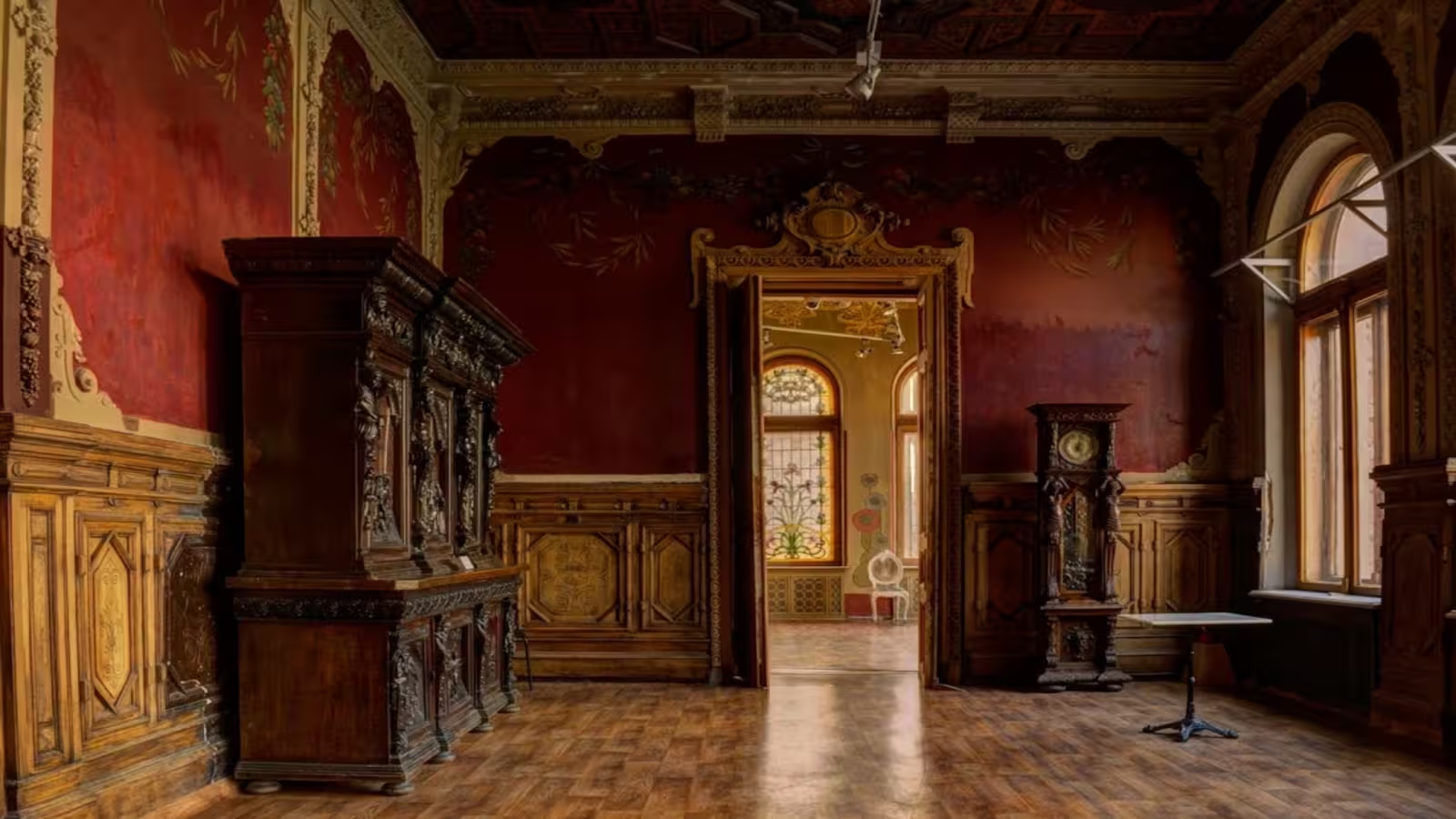
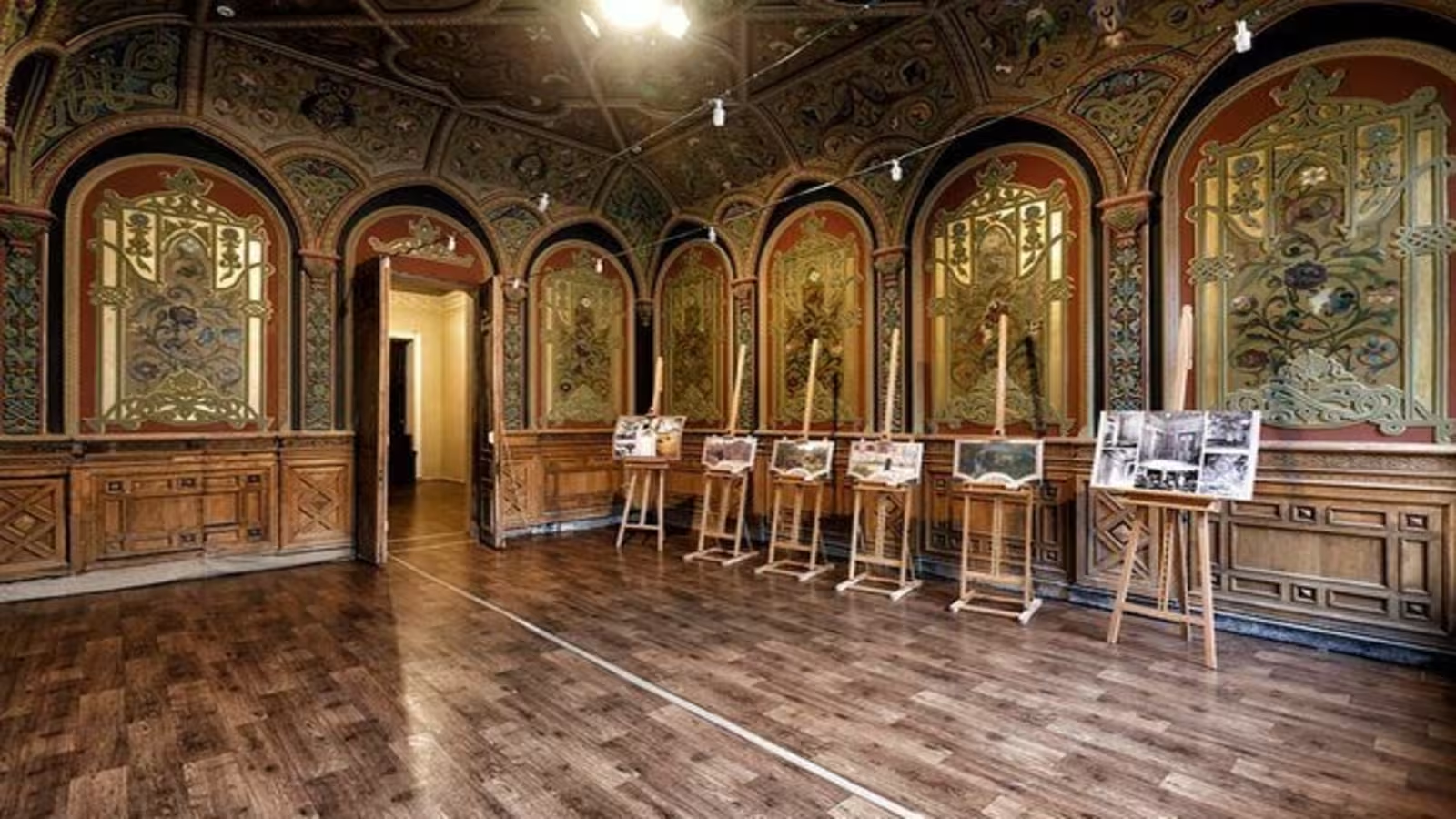
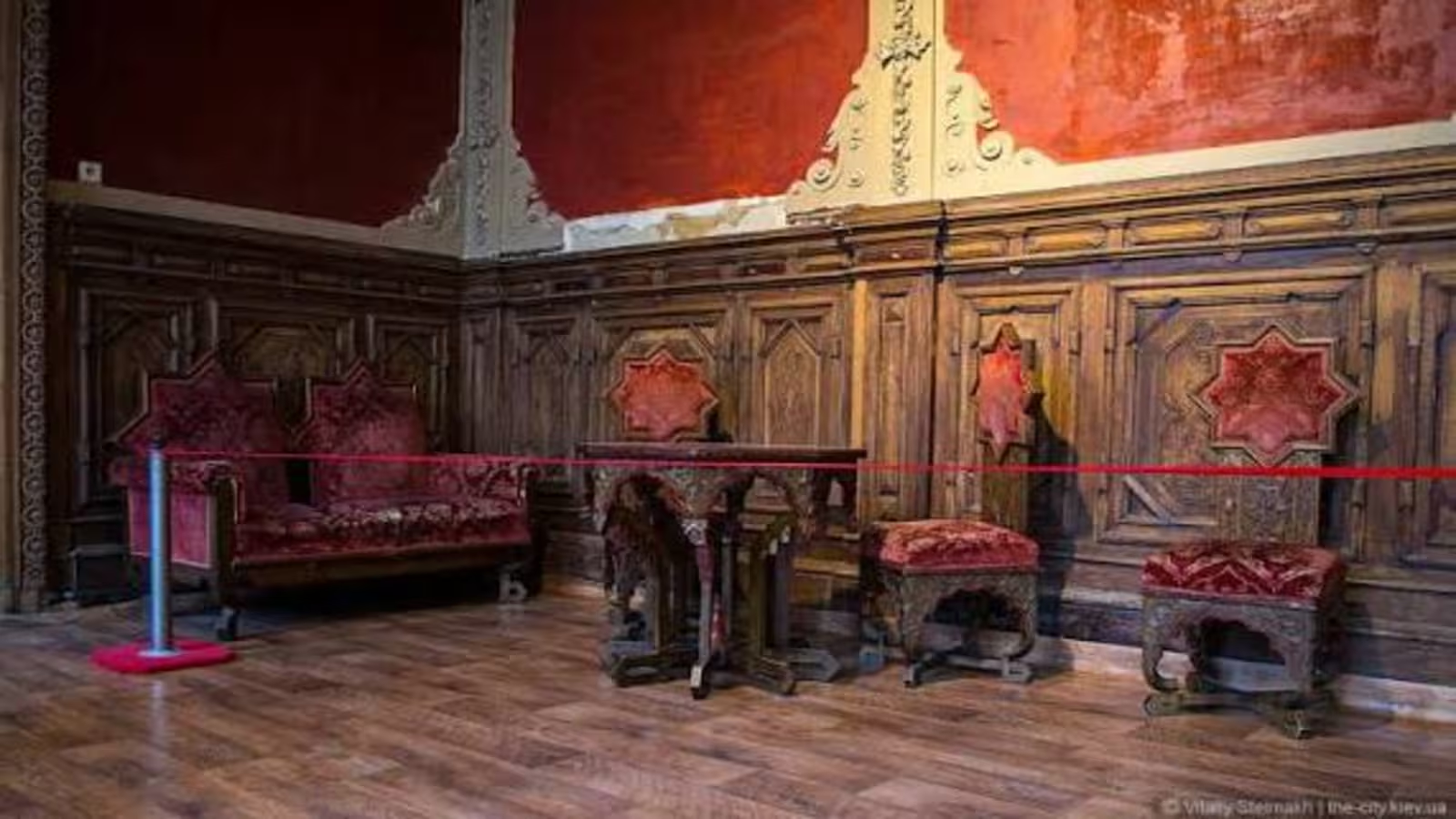
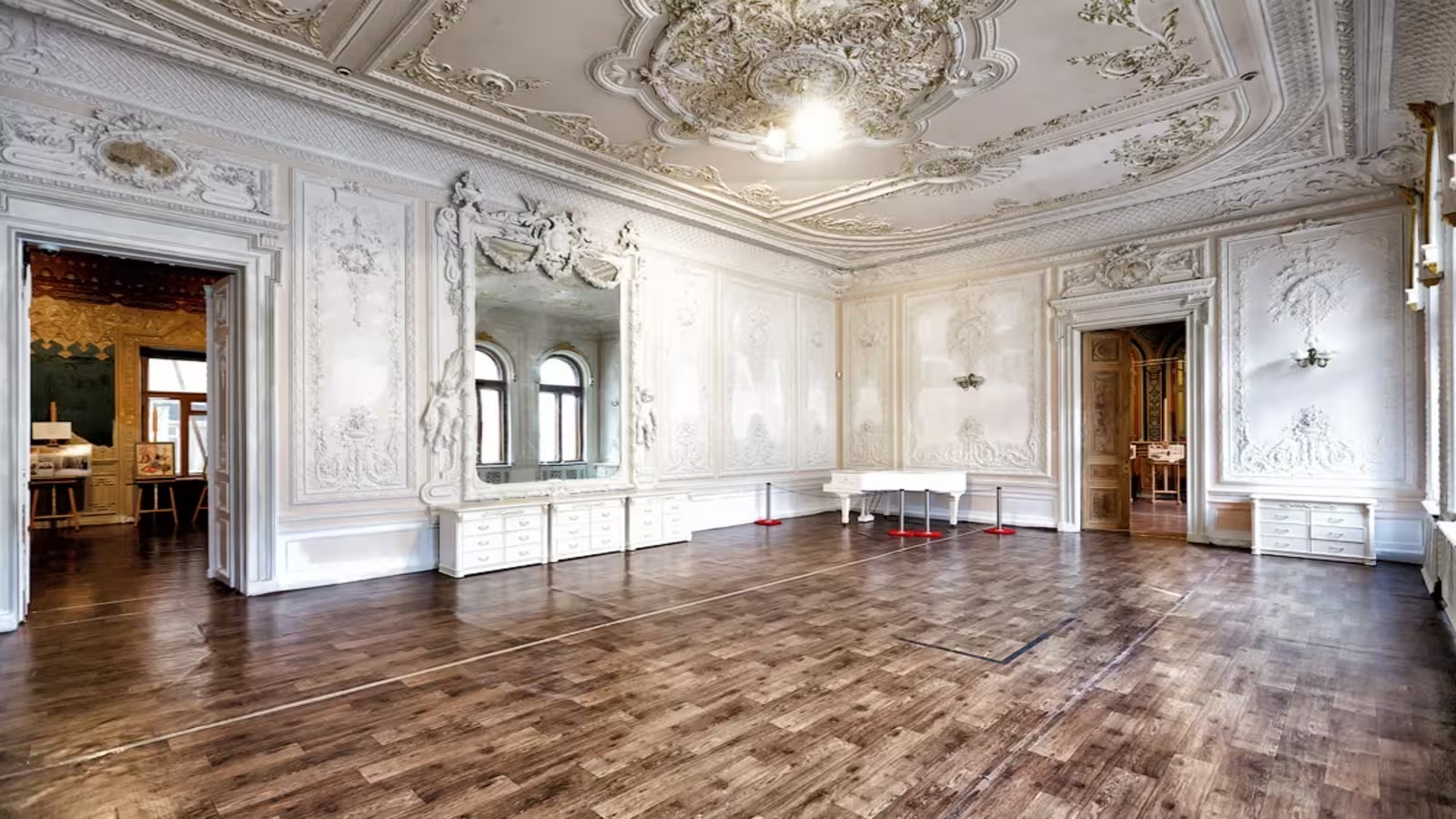
  • Six of the nine state rooms have survived in their original form: the Moorish Room, the Garnet Dining Room, the Art Nouveau Hall with iris stained glass, the White Hall
  • The permanent exhibition “Ivan Marchuk. Museum Collections” – forty works from museum collections, from the late 1960s
  • The museum has reopened for the first time since 2022 – a chance to see what was closed for four years
  • The owner’s State Study is decorated in the Russo-Byzantine style, like the interiors of old Kyiv princely chambers
  • Generations of Kyiv couples were married here: from 1960 to 1981 the house was the Central Wedding Palace

Good to know

Entrance from Pylypa Orlyka Street
The house’s address is 17/2 Shovkovychna Street, but the visitor entrance is only from 4 Pylypa Orlyka Street. Nearest metro station: Arsenalna; also convenient from Klovska and Palats Sportu.
Closed on Mondays and Thursdays
Tuesday – 11:00 to 19:00, box office until 18:20. Wednesday, Friday, Saturday and Sunday – 11:00 to 18:00, box office until 17:20.
Admission – UAH 200
A standard ticket costs UAH 200, reduced UAH 100. Box office on site, cash or card.
Discounts and free admission
50% off for school and university students, pensioners and people with Group III disabilities. Free for people with Group I and II disabilities, combat veterans and preschool children. Show a supporting document at the box office.
Tours – by advance booking
The museum runs tours of the historic halls and the Marchuk exhibition; book in advance by phone at +38 (044) 253-17-60. Check the price when booking. Free tours are offered on request for socially vulnerable groups.
Photos – no flash
You can take photos and videos on your phone in the halls without flash. The museum asks you not to talk on the phone in the halls and to keep about a meter away from the exhibits and interior features.
What stays outside the halls
Coats, umbrellas and large items go in the cloakroom. Food and drinks, bicycles, roller skates and scooters, large pets and weapons are not allowed in the halls.
Exhibitions and concerts too
The halls regularly host temporary exhibitions and concerts. Check the program and dates on the museum’s Instagram and Facebook pages – @prostirmystetstva.

The main reason to come here right now is the house itself. Of its nine state rooms, six have survived in their original form and two more were restored, so you are walking not through a museum reconstruction but through real early 20th-century interiors. Each room is in a different style, and moving from one to the next is a pleasure in itself: the Moorish smoking room, the Neo-Renaissance Garnet Dining Room, the Neo-Rococo Small Drawing Room, the Art Nouveau Hall with authentic iris stained glass, the Empire-and-Rococo White Hall with a large old mirror framed by cupids, and the owner’s State Study in the Russo-Byzantine style, resembling an old princely chamber. The French Hall still has stucco cartouches with the monogram “SM” (in Cyrillic) – the initials of the man who commissioned the house. Since May 12, 2026, the house has hosted the permanent exhibition “Ivan Marchuk. Museum Collections” – forty works by the artist from museum collections, from the late 1960s onward, opened for his 90th birthday. For the house itself this is just as big an event: after 2022 the museum stood closed, and the Marchuk exhibition became the occasion to open its doors to visitors again. The mansion was built in 1901 for merchant and patron Semen Mohylevtsev to a design by architect Volodymyr Nikolaiev. It was modeled on a 15th-century Italian palazzo: rusticated stone, restrained proportions, lions and caducei on the facade. Mohylevtsev was a member of the City Duma, chairman of the council of elders of the Merchants’ Assembly and head of the Kyiv Exchange Committee, and he donated large sums to the city – including half a million rubles for the building of the Pedagogical Museum, which now houses the Teachers’ House. After that the house went through almost everything a building in 20th-century Kyiv could go through. In 1917 it was nationalized; in 1918 Ihor Kistiakivskyi lived here, and in 1919 Christian Rakovsky and Andrii Cherniavskyi. From 1925 its halls held apartments for staff of the All-Ukrainian Academy of Sciences, and in 1934 the house was remodeled to a design by Pavlo Aloshyn: the tiled stoves were taken out, Serhii Svitoslavskyi’s paintings were removed from the state study and the murals were painted over. Before the war it housed the “All-Union Society for Cultural Relations with Foreign Countries”, and from 1960 to 1981 the Central Wedding Palace, which generations of Kyiv couples passed through. Then came a children’s chess and checkers club and restoration; from 1985 to 2009 it was the Children’s Art Gallery, and since 2009 the house has been a branch of the National Museum “Kyiv Art Gallery” under the name Chocolate House Art Center. At that time the French and Moorish Halls and the Small Reception Room were restored, and the stained glass of the main staircase was recreated. Besides the permanent exhibition, the center regularly holds temporary exhibitions – from museum projects to design and theater shows – and hosts concerts in its halls. So a repeat visit almost always means something new beyond the interiors themselves.